
Understanding the Core Differences in Home Transformation
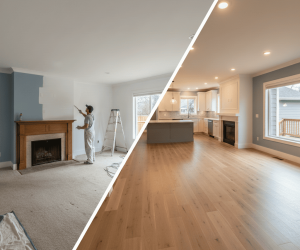
When you decide to upgrade your living space in 2026, you will likely hear three terms used interchangeably, home renovation, home remodeling, and home improvement.
While they might sound like the same thing to a casual observer, a professional home renovation contractor knows that each represents a different level of structural involvement, legal requirements, and investment goals.
Distinguishing between these categories is the first step in planning a successful project that aligns with your vision.
Whether you are looking to refresh a tired aesthetic or completely reconfigure your floor plan, knowing the right terminology helps you communicate effectively with your general contractor and ensures you are following local building codes in regions like Nashua, NH, or Massachusetts.
At Pedroza’s Painting Services inc., we believe that clarity is the foundation of every high-quality project. By understanding the nuances of these industry terms, you can better manage your expectations, timelines, and the specific expertise required for your property’s evolution.
What Exactly is Home Renovation?
In the strictest sense, renovation means to restore something to a good state of repair.
Think of it as a “revival” of your home’s existing structure. If your kitchen cabinets are dated but the layout works perfectly, or if your interior painting has faded over the last decade, you are looking at a renovation project.
The primary goal of renovation is to update the look and feel without changing the intended purpose of a room. You aren’t moving walls or relocating plumbing stacks.
Instead, you are replacing old materials with new ones. Common renovation tasks include drywall repair, refinishing floors, or upgrading fixtures to more modern, energy-efficient versions.
Defining Home Remodeling: A Structural Shift
Remodeling is a more intensive process that involves changing the use, layout, or structure of a space. If you want to transform a cramped basement into a functional home office or knock down a wall to create an open-concept living area, you are entering the territory of a remodel.
Because remodeling often involves structural changes, it typically requires more complex planning and a deeper understanding of load-bearing walls, electrical grids, and HVAC systems.
This is where the expertise of a home renovation contractor becomes vital, as they coordinate various sub-services like finish carpentry and flooring installation to ensure the new layout is safe and cohesive.
Comparing Project Scope: Renovation, Remodeling, and Improvement
To help you decide which path is right for your property, it is helpful to look at how these projects differ across several key factors. While a home improvement might take a weekend, a full-scale remodel can span several months.
The following table breaks down the primary characteristics of each category to give you a clear bird’s-eye view of what to expect during your 2026 project planning phase.
At-a-Glance Project Comparison
| Feature | Home Renovation | Home Remodeling | Home Improvement |
| Primary Goal | Restore and refresh | Change form or function | Enhance specific features |
| Structural Changes | Rarely | Frequently | Almost Never |
| Permits Required | Sometimes | Highly Likely | Rarely |
| Complexity | Moderate | High | Low to Moderate |
| Professional Needed | Recommended | Essential | Optional/Project Dependent |
| Timeline | Weeks | Months | Days to Weeks |
The Role of Home Improvement in Property Value
Home improvement is the broadest category of the three. It can encompass anything from minor repairs to significant upgrades like siding installation.
Generally, home improvements are targeted projects aimed at enhancing the comfort, safety, or curb appeal of a house without necessarily undergoing a full-scale renovation of a specific room.
For homeowners in New Hampshire and Massachusetts, exterior improvements are particularly popular in 2026.
Maintaining the home’s “envelope” through high-quality exterior painting or repairing a weathered deck ensures that the property remains protected against the New England climate while boosting its overall market desirability.
Why the Distinction Matters for Homeowners in 2026

Choosing the wrong term when pulling permits or hiring a team can lead to significant delays. If you tell a local business you want a “renovation” but your plans involve moving a bathroom to the other side of the house, the initial estimate and the timeline will be drastically inaccurate.
Furthermore, the legal implications differ. In most jurisdictions, a simple interior painting project doesn’t require a permit, but a remodel that involves electrical rewiring or moving walls almost certainly does. Working with an experienced home renovation contractor ensures that your project remains compliant with 2026 building regulations.
Permitting and Legal Requirements
When you engage in home remodeling, you are often interacting with the city’s building department.
Since you are altering the footprint or the internal systems of the structure, inspectors need to verify that the work meets current safety codes. This is a safeguard for your family and your investment.
Renovations, on the other hand, often fall under “cosmetic” or “maintenance” categories. While some bigger renovations, like full drywall installation across an entire floor, might require a quick check, they are generally less bureaucratic than a remodel.
Knowing this helps you plan your “start date” more effectively, as you won’t be caught off guard by a three-week permit approval process.
Impact on Resale and Return on Investment
In the 2026 real estate market, buyers are looking for “turn-key” properties. A well-executed home renovation can often provide a higher ROI than a massive remodel because the costs are lower while the visual impact remains high.
A fresh coat of paint, new engineered hardwood flooring, and updated cabinetry can make a house feel brand new.
However, remodeling can solve fundamental flaws in a house that might otherwise prevent a sale. If a home has a poorly designed layout that feels claustrophobic, a remodel that opens up the space adds value that a simple renovation cannot reach.
It’s about balancing the cost of the structural change against the projected increase in equity.
The Integrated Approach: How Services Overlap
In reality, most major projects are a blend of all three categories. A comprehensive home renovation contractor like Pedroza’s Painting Services inc. often manages a project that starts as an improvement, turns into a renovation, and includes elements of remodeling.
For example, a “Kitchen Project” might involve:
Improvement: Swapping out an old dishwasher for a new energy-efficient model.
Renovation: Replacing the countertops and applying professional interior painting to the walls and ceiling.
Remodeling: Removing a pantry closet to extend the counter space or adding a new island with a prep sink.
The Importance of Vertical Integration in Contracting
When your contractor understands the entire “Home Renovation” ecosystem, they can provide better advice on the sequence of work. You wouldn’t want to finish your luxury vinyl plank flooring before completing a major drywall hang and tape job, as the dust and debris could damage the new floors.
A professional team ensures that the finish carpentry, such as baseboards and crown molding, is installed only after the walls are perfectly prepped and the primary painting stages are complete.
This level of coordination is what separates a DIY-looking project from a professional-grade home transformation.
Selecting the Right Services for Your Vision
Depending on your goals for 2026, you might focus on specific clusters of services. If you are preparing to sell, focusing on the “Exterior Envelope” is a smart move. This includes siding installation and refreshing the deck painting to ensure the first impression is flawless.
If you are renovating for your own long-term comfort, you might focus on “Interior Finishes.” This involves a mix of custom cabinetry, door installation, and sophisticated flooring service options like engineered hardwood.
By grouping these services, you create a cohesive aesthetic that flows from room to room.
Planning Your 2026 Project: Step-by-Step Guidance
Success in home transformation is 80% preparation and 20% execution. Whether you are looking for a home renovation contractor in Nashua, Manchester, or Boston, the process remains relatively consistent. Following a structured approach minimizes stress and keeps the project on track.
Assessing Your Needs and Intentions
Start by asking yourself what the primary pain point is in your home. Is it the way the house looks, or the way it functions? If the issue is strictly aesthetic, you are likely looking for a home renovation.
If you find yourself constantly frustrated by the lack of space or a poorly placed wall, you are in the market for a remodel.
Once you define the “Why,” you can better communicate the “What” to your contractor. Be sure to mention if you have specific preferences for materials, such as luxury vinyl plank over traditional tile, or if you need commercial painting standards for a home-based business area.
Setting a Realistic Timeline
In 2026, supply chain stability has improved, but high-quality labor is always in demand. A standard interior painting project for a single room might take a few days, while a full home renovation involving drywall installation and flooring can take several weeks.
Remodeling projects that require structural inspections and multi-trade coordination (plumbing, electrical, and carpentry) should be planned with a buffer.
Always discuss the “critical path” with your general contractor, which is the sequence of tasks that must happen in a specific order to prevent the whole project from stalling.
Key Terminology Every Homeowner Should Know
To navigate the world of home improvement in 2026, you should be familiar with the “industry speak” used by professionals. This helps you read contracts more clearly and ensures there are no surprises during the final walkthrough.
Load-Bearing Wall: A wall that supports the weight of the roof or the floor above it, crucial for remodeling decisions.
Substrate: The surface underneath your finish material, such as the drywall hang before paint or the subfloor before carpet installation.
Curb Appeal: The visual attractiveness of a house as seen from the street, often boosted by siding installation and exterior painting.
Change Order: A formal amendment to the original contract when you decide to add or change a service mid-project.
Scope of Work: A detailed document outlining every task the home renovation contractor will perform.
The Value of Quality Sub-Services
Don’t overlook the “hidden” parts of a renovation. For example, the quality of your drywall tape and plaster work determines how smooth your final paint job will look. Even the most expensive paint cannot hide a poorly prepared wall.
Similarly, in finish carpentry, the precision of the mitre joints on your baseboards or the way a door installation is leveled affects the overall “feel” of the home. These small details are the hallmarks of a professional LocalBusiness that takes pride in its craft.
Choosing Between DIY and Professional Contractors
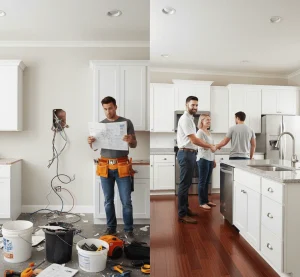
With the wealth of information available in 2026, many homeowners feel tempted to tackle projects themselves. While painting a bedroom is a manageable weekend task for many, larger-scale renovations and any form of remodeling should be left to the experts.
When to Hire a Professional
You should always hire a professional home renovation contractor when the project involves:
Structural integrity: Removing or moving walls.
Extensive Prep Work: Large-scale drywall installation or plaster work.
Specialized Equipment: Projects like siding installation or professional-grade exterior painting at heights.
Complex Finishes: Installing engineered hardwood flooring or custom cabinetry.
Professional contractors carry insurance, understand local codes, and have established relationships with suppliers, which can often save you from the “hidden costs” of DIY mistakes that need to be fixed later.
Identifying a Reputable Local Business
When searching for a contractor in New Hampshire or Massachusetts, look for deep local roots. A company that serves areas like Bedford, Amherst, Hudson, and Andover will be familiar with the specific architectural styles and climate challenges of the region.
Check for a comprehensive service list. A contractor that offers everything from deck repair to finish carpentry shows a level of versatility and understanding of the “whole house” as an integrated system.
This topical authority is a strong indicator of a reliable partner for your home’s evolution.
Frequently Asked Questions About Home Transformation
Does painting count as a renovation?
Yes, interior painting is one of the most common and effective forms of renovation. It restores the surface of your walls and can completely change the mood of a room without moving a single structural element.
Is siding replacement a remodel or an improvement?
It is generally classified as a major home improvement or part of an exterior renovation. High-quality siding installation protects the home from moisture and improves insulation, making it a functional upgrade as well as an aesthetic one.
Which is more expensive, remodeling or renovating?
Generally, remodeling is more expensive because it involves structural changes, professional design, and multiple trades. Renovation focuses on the surface and existing structure, which typically requires fewer specialized permits and less labor time.
Should I stay in my home during a renovation?
For minor renovations like carpet installation or painting, staying in the home is usually fine. For major remodeling or extensive drywall installation, the dust and noise might make it uncomfortable. Discuss a “phased approach” with your contractor to minimize disruption.
Conclusion: Making Your Vision a Reality in 2026
Whether you choose to renovate, remodel, or simply improve your home, the goal is the same, to create a space that reflects your lifestyle and protects your financial investment.
By understanding the differences between these paths, you can plan with confidence and choose the right partner for the job.
If you are located in Nashua, NH, or surrounding areas like Merrimack, Hollis, or Tyngsborough, MA, and are looking for a team that understands the semantic complexity and technical requirements of a high-end home transformation, we are here to help.
Pedroza’s Painting Services inc. is more than just a painting company, we are your dedicated home renovation contractor, ready to handle everything from finish carpentry and flooring service to the final, perfect coat of paint.
Ready to Start Your Transformation?
Don’t leave your home’s future to chance. Contact a team that brings expertise, local knowledge, and a commitment to quality to every square inch of your property.
For a detailed consultation and to discuss your 2026 project goals, reach out to us today. We look forward to helping you define the best path forward for your home.
Click here to contact Pedroza’s Painting Services inc. today!